
How is a person identified through DNA?
To identify a missing person through DNA, the genetic profile of the remains or of the located person is compared with that of their relatives, who provide a reference sample. If the profiles fit the kinship far better than its absence, the identification is confirmed.
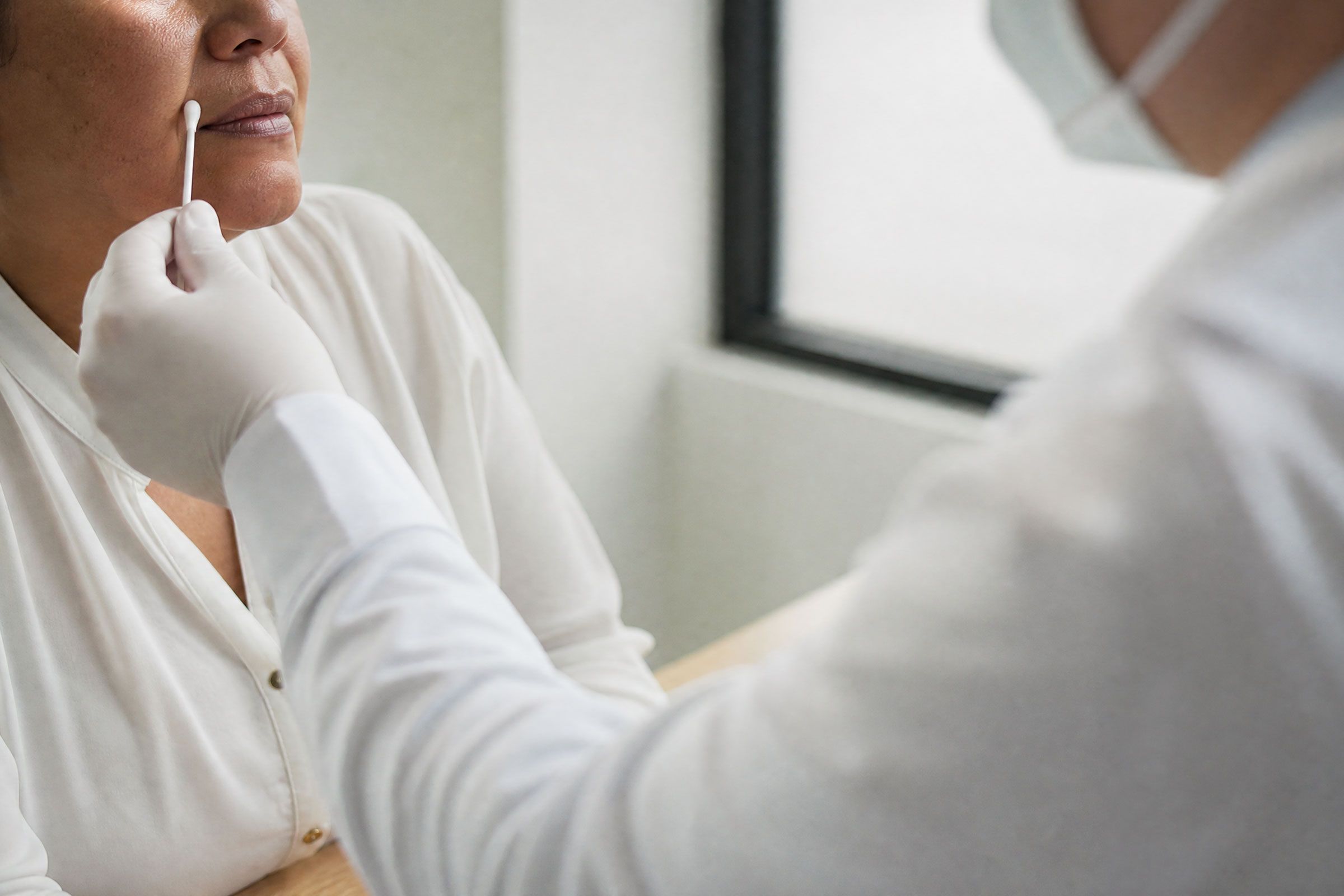
What is a reference sample?
It is a small biological sample from a relative, usually a few drops of blood from a fingertip or a swab rubbed inside the cheek, from which their genetic profile is obtained. It is taken by the competent authorities and recorded with its chain of custody.
Why are samples requested from several relatives?
Every person inherits half of their DNA from their mother and the other half from their father. That is why samples from the mother and father, or from daughters and sons, provide the most information.
When that is not possible, sisters, brothers or other relatives are used. The more relatives take part, the clearer the comparison can be.
What does a kinship result mean?
The laboratory calculates a Likelihood Ratio, that is, how many times more likely those profiles are if the kinship exists than if it does not. In missing persons identification a very high result is required before an identification is considered positive, and an examiner always reviews it.
How long does it take?
There is no fixed timeline. It depends on the condition of the remains, on whether a profile already exists to compare with, and on the laboratories' workload. The authority handling the case is the one that can report progress.
Your rights over the sample
The rules depend on each country. In Mexico, the General Law on disappearances establishes that relatives' samples may only be used for identification purposes, and that families may appoint independent experts for the identification.
Where is a sample given?
Ask the authority in charge of the search in your country where and when reference samples are taken. In Mexico, the specialized prosecutor's office for disappearances or your state's search commission can guide you. Find the official channels in If you are looking for someone.
Frequently asked questions
Does giving the sample hurt?
It is a simple, minimally invasive procedure, usually a fingertip prick or a swab rubbed inside the cheek.
Can my sample be used for anything else?
In Mexico, no. Under the General Law on disappearances, relatives' samples may only be used for identification purposes. In other countries, ask the authority taking the sample how it will be used.
Is it useful if the person went missing many years ago?
It can be. The reference profile is also compared with remains found later; whether identification is possible depends on the condition of the remains.